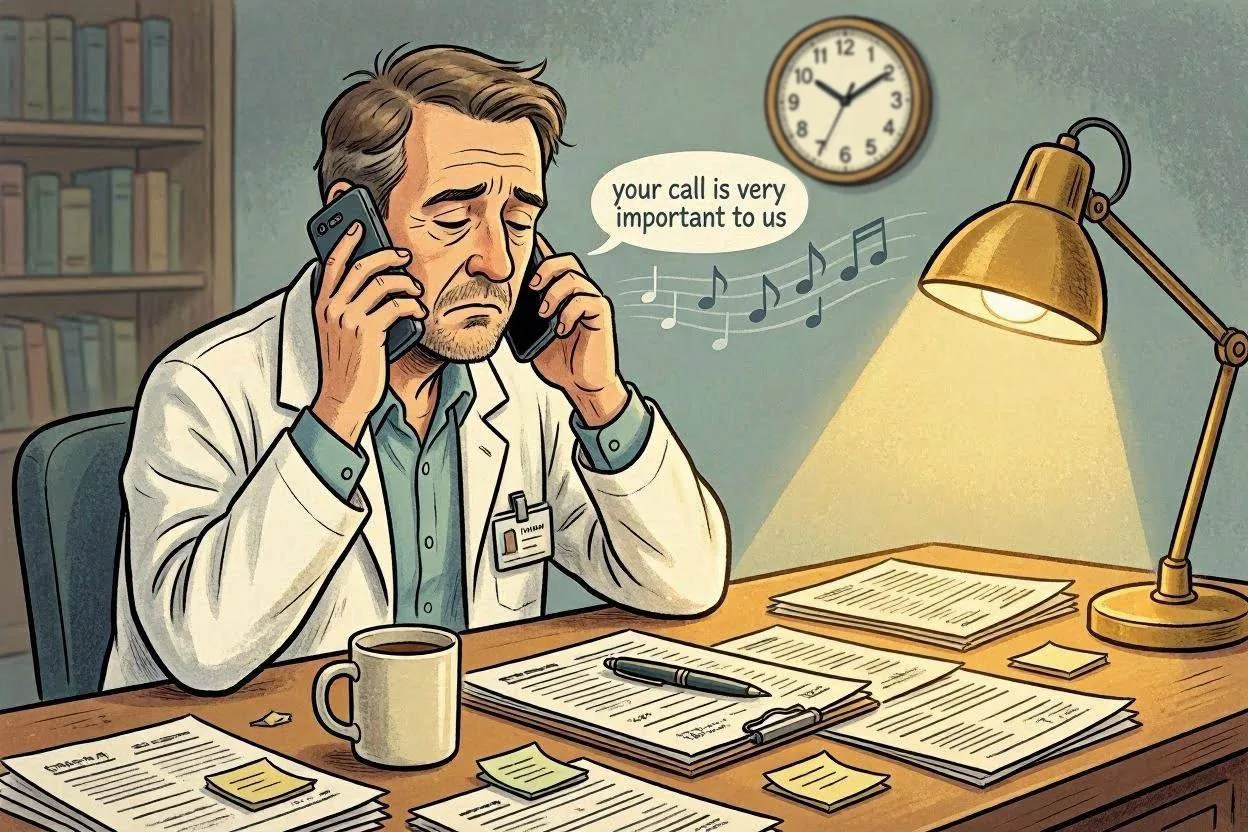
Telehealth practices spend hours of precious clinical time addressing pharmacy callbacks. In our experience, providers reported spending well over 150 hours a year on this — with most of that time being spent after hours, waiting on hold.
What is a pharmacy callback?
A pharmacy callback is when a pharmacist reaches out to the provider's practice to conduct due diligence on a prescription. Controlled substance prescriptions dominate callback volume because they carry a layer of additional government scrutiny. Pharmacists usually call to verify prescription details, such as medical necessity or provider's license number.
While this may feel cumbersome, it reflects a codified legal obligation: under Drug Enforcement Administration (DEA) regulation, pharmacists have a duty to confirm a controlled substance prescription is legitimate before filling it.
If found delinquent, pharmacists face sanctions, license discipline, or even civil liability. The stakes are high: opioid litigation alleging Rite Aid ignored red flags on controlled substance prescriptions was a central factor in its 2023 bankruptcy filing.
Why telehealth prescriptions draw more callbacks
The strain of pharmacy callbacks is compounded for telehealth practices. Why?
Local clinics build pharmacy trust over years of familiarity. Telehealth practices don't get that head start; every new pharmacy relationship starts from zero, and prescribers licensed across multiple states multiply the verification work as the practice grows.
The regulatory backdrop
The DEA's fourth temporary extension keeps telemedicine controlled-substance prescribing flexibilities in place through December 31, 2026. That keeps the door open for telehealth prescribing, but it does nothing to close the trust gap between remote prescribers and the pharmacies filling their scripts — in other words, callback volume isn't going away.
Common operational pain points we see
- Non-clinical staff fielding pharmacy calls outside their scope, resulting in everything being escalated to the prescriber, increasing clinical burden and burnout
- Callbacks coming outside the practice's business hours, with no one available to respond — or an unhappy provider stuck on the phone while making dinner
- Patients caught in the middle, creating a negative experience and potential churn
How Hivemind can help
If pharmacy callbacks are consuming your clinicians' time or slowing down patient care, Hivemind's team of global nurses can effectively handle them on your practice's behalf.
Reach out to learn more.
This article is for general informational purposes and does not constitute legal, regulatory, or clinical advice. Please excuse typos.. the above content was not written by AI :)